Semiconductor
Wafer-Process Components
Wafer carriers and susceptors for CVD/epitaxy, plasma focus rings, CMP retaining rings, cantilever paddles, boat pins and showerhead parts in high-purity SSiC.
Sintered SiC with extreme hardness, plasma resistance and thermal conductivity — specified for semiconductor wafer carriers, seals and the harshest process environments.
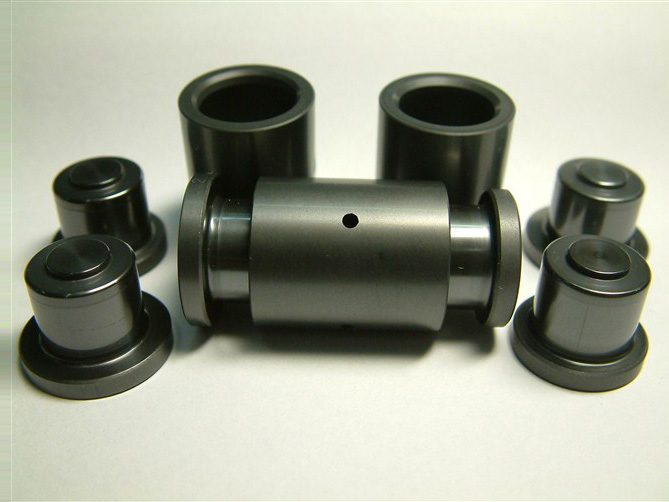
Our high-purity pressureless-sintered SiC (SSiC) is one of the few materials that survives fluorine plasma, strong acids and repeated thermal shocks while remaining dimensionally stable. In semiconductor fabs, that combination makes it the default choice for wafer carriers and etch-chamber wear parts.
| Property (typical) | DA-SC (SSiC) | DA-SC-R (RBSiC) |
|---|---|---|
| Bulk density (g/cm³) | 3.10–3.15 | 3.05–3.10 |
| Flexural strength (MPa) | 380–420 | 250–350 |
| Thermal conductivity (W/m·K, 20 °C) | 110–120 | ≈ 100 |
| C.T.E. (10⁻⁶/K, 20–1000 °C) | 4.2 | 4.3 |
| Hardness (HV) | 2600–2800 | 2200–2500 |
| Free Si content | None | 8–12 % |
| Max. service temperature (°C, inert) | ≈ 1600 | ≈ 1380 |
Typical values for reference; custom specifications and full test reports available on request.
Wafer carriers and susceptors for CVD/epitaxy, plasma focus rings, CMP retaining rings, cantilever paddles, boat pins and showerhead parts in high-purity SSiC.
Stationary and rotating seal rings, thrust bearings and shaft sleeves for chemical, slurry and clean-water pumps — dry-running capable with SSiC/SSiC pairs.
Beams, rollers, posts, setter plates and saggers for high-temperature firing of electronic ceramics, MLCC, powder metallurgy and technical glass.
Sandblasting and descaling nozzles, spray nozzles, cyclone liners, slurry pump wear plates and blast-media components with multi-year service life.
Photovoltaic diffusion-furnace carriers, polysilicon casting crucible parts and hydrogen / solar-thermal components exposed to heat and corrosion.
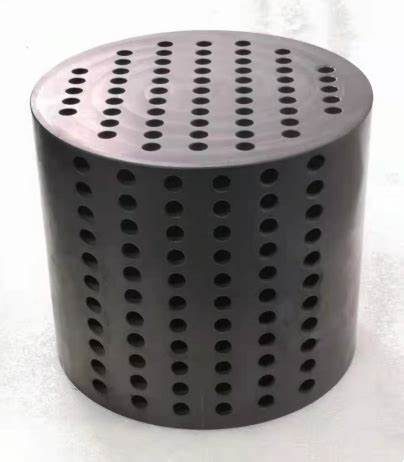
Complex milled and ground geometries with flatness and parallelism to ±0.005 mm, produced from STEP / DXF drawings with full inspection reports.
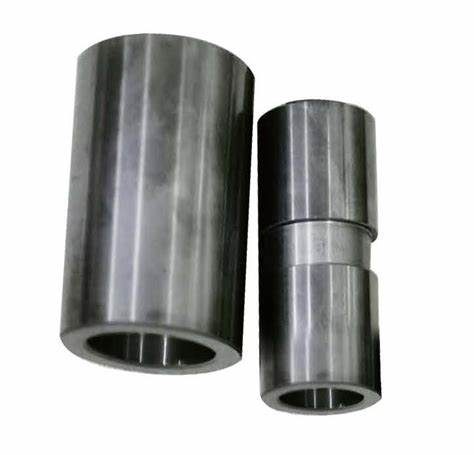
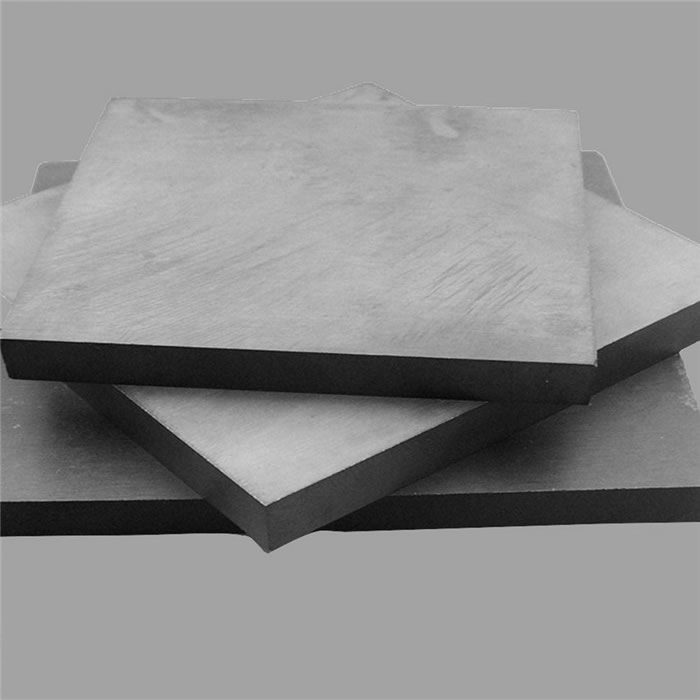
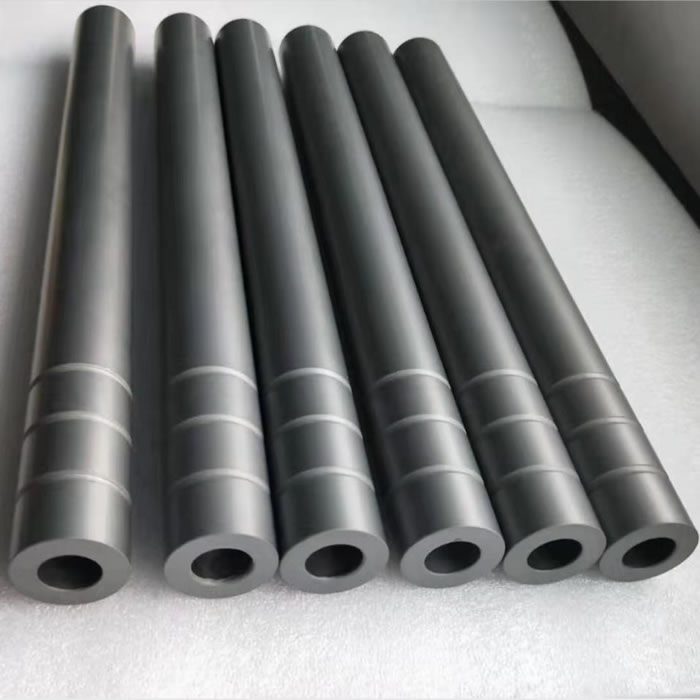
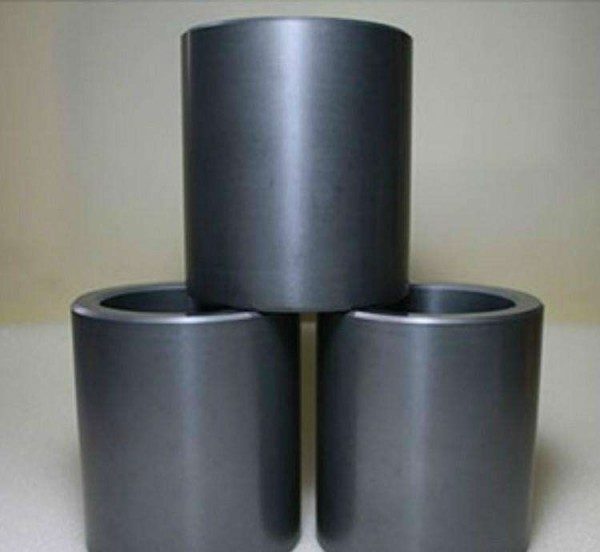
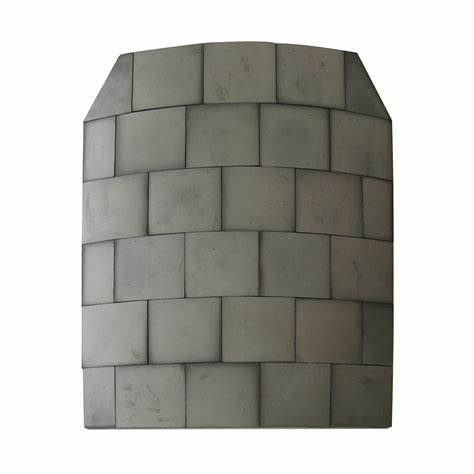
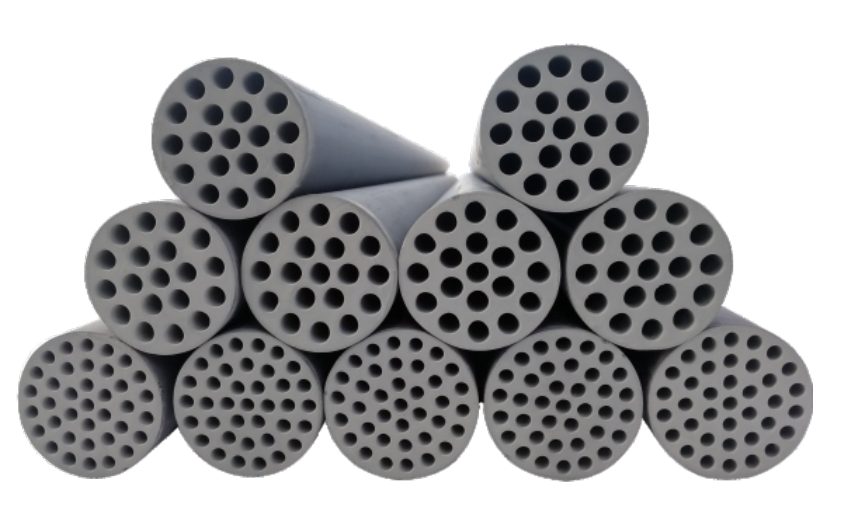
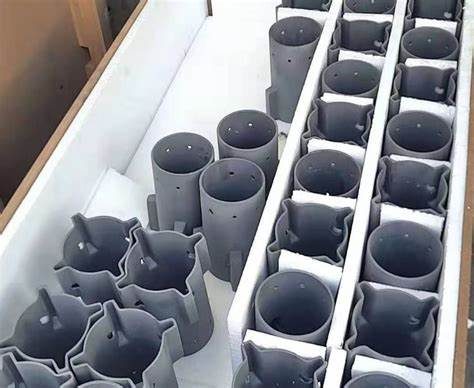
Actual production parts from our facility — send us your drawing or target application and we will quote the same.
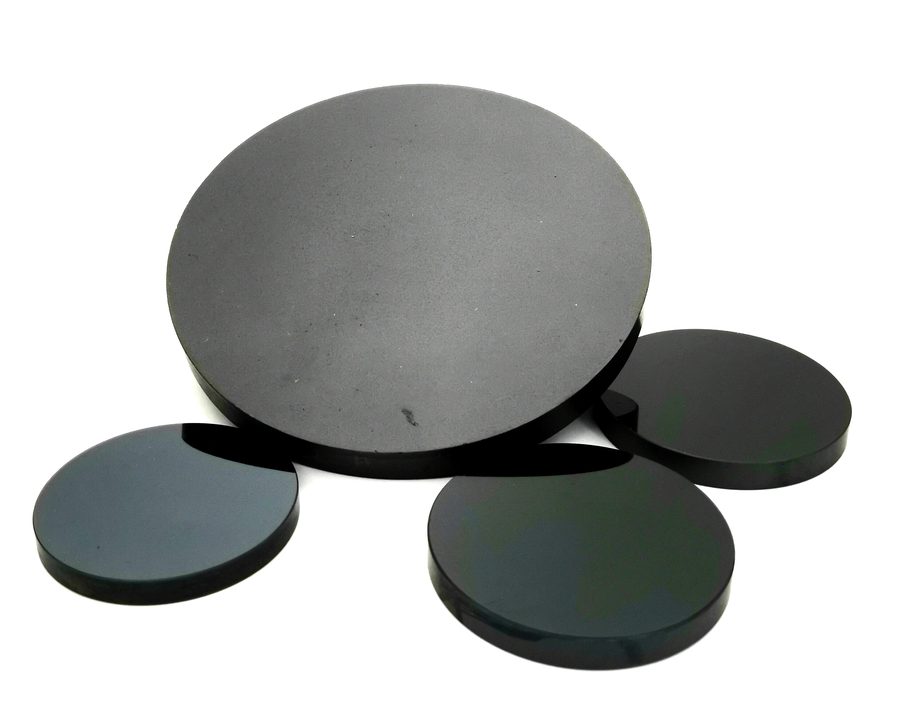
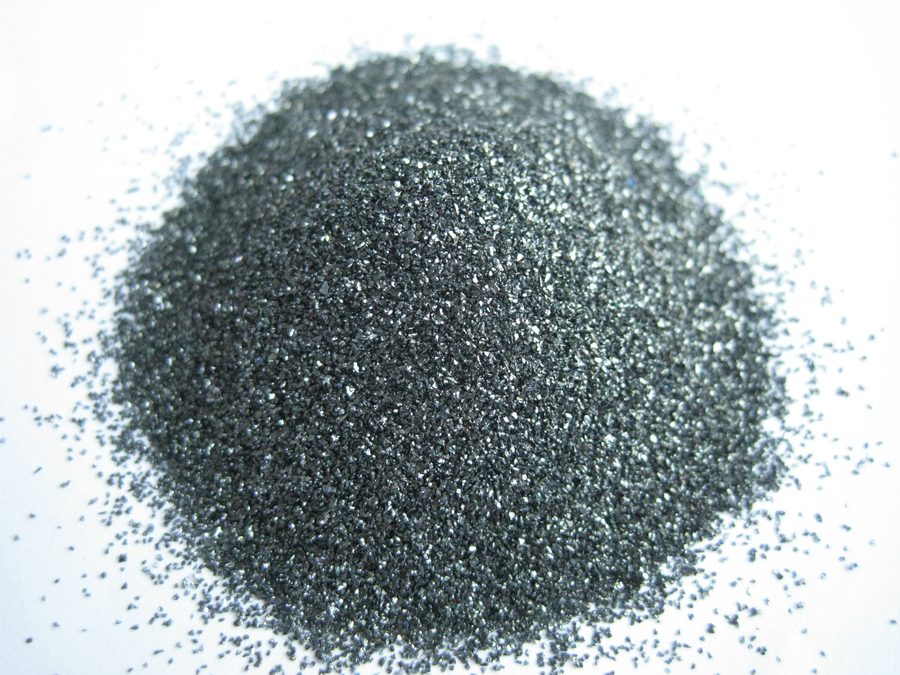
We supply high-purity sintered SiC (DA-SC, SSiC, free silicon content: none) with total metallic impurity kept at ppm level, plus a reaction-bonded grade (DA-SC-R, RBSiC, 8–12% free silicon) for larger, more cost-sensitive parts. Purity, density and grain structure are confirmed by certificate of analysis on request.
SiC has substantially better plasma erosion resistance in fluorine and chlorine chemistries, roughly four times the thermal conductivity of alumina (110–120 vs 26–30 W/m·K), excellent thermal-shock resistance and it operates to about 1600 °C in inert atmosphere. For long-life focus rings, chamber liners, showerhead plates and carrier hardware, SiC is usually the more economical choice over its service life.
DA-SC retains its strength to about 1600 °C in inert or vacuum atmospheres. In oxidising air it forms a protective silica layer and can be used continuously to roughly 1400–1500 °C. Thermal-shock resistance is excellent because of its low expansion and high conductivity.
Yes — these are among our main semiconductor components. We produce SiC focus rings in the common 200 mm and 300 mm process-tool sizes, cantilever and robot paddles, wafer boats and carriers, gas injectors and mechanical seal rings. Most are produced to customer drawing rather than from a catalogue.
SiC is diamond-ground, lapped and polished — never conventionally machined. We hold ±0.005 mm on critical features and can produce sealing faces flat to within a few light bands for mechanical-seal duty. Because SiC is very hard (2600–2800 HV), grinding time and tool wear are the main cost drivers, which is why part design matters as much as material choice.
Send drawings or a sample description — material certificate and dimensional report included with every shipment.