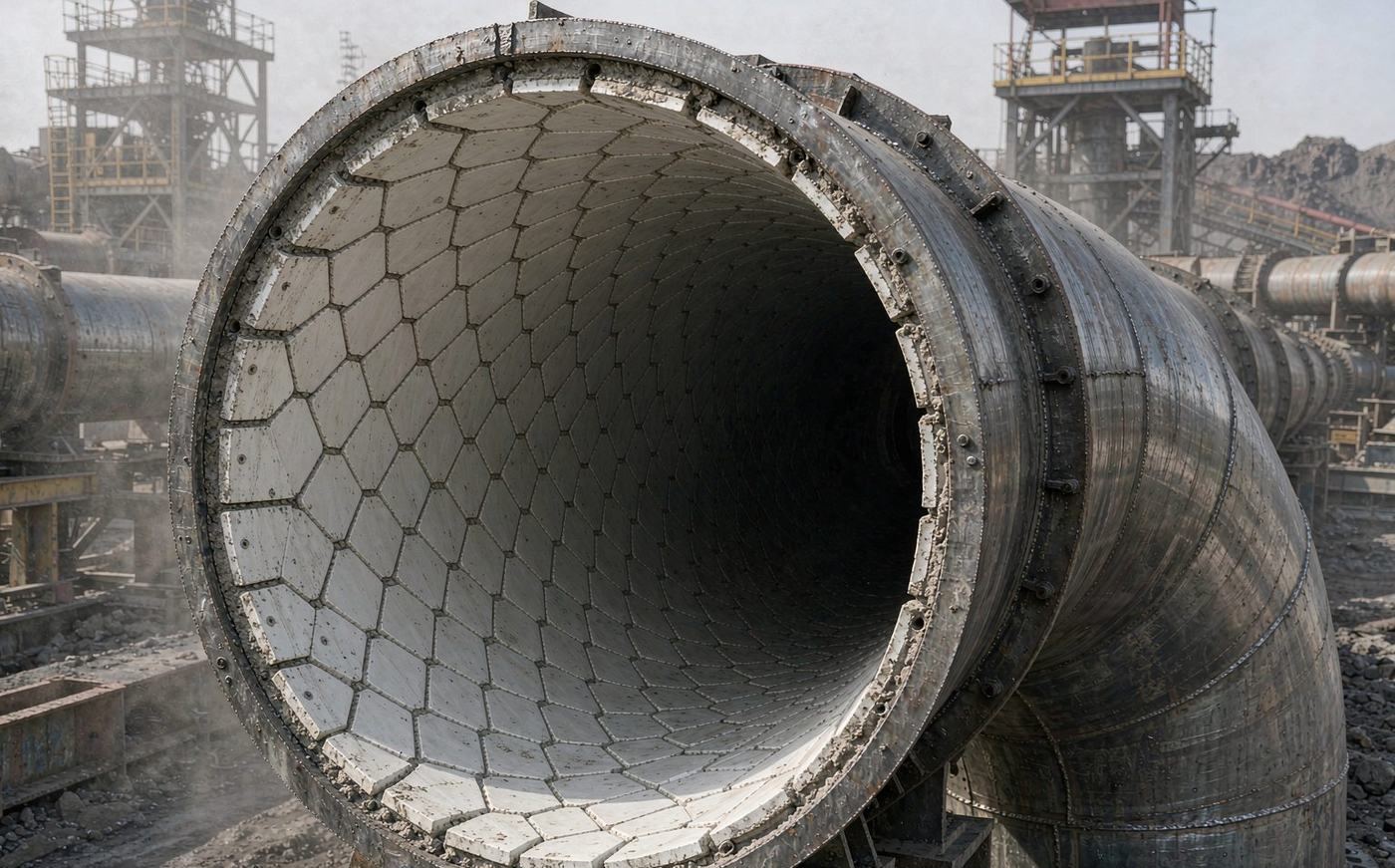
Piping
Ceramic-Lined Pipe & Elbows
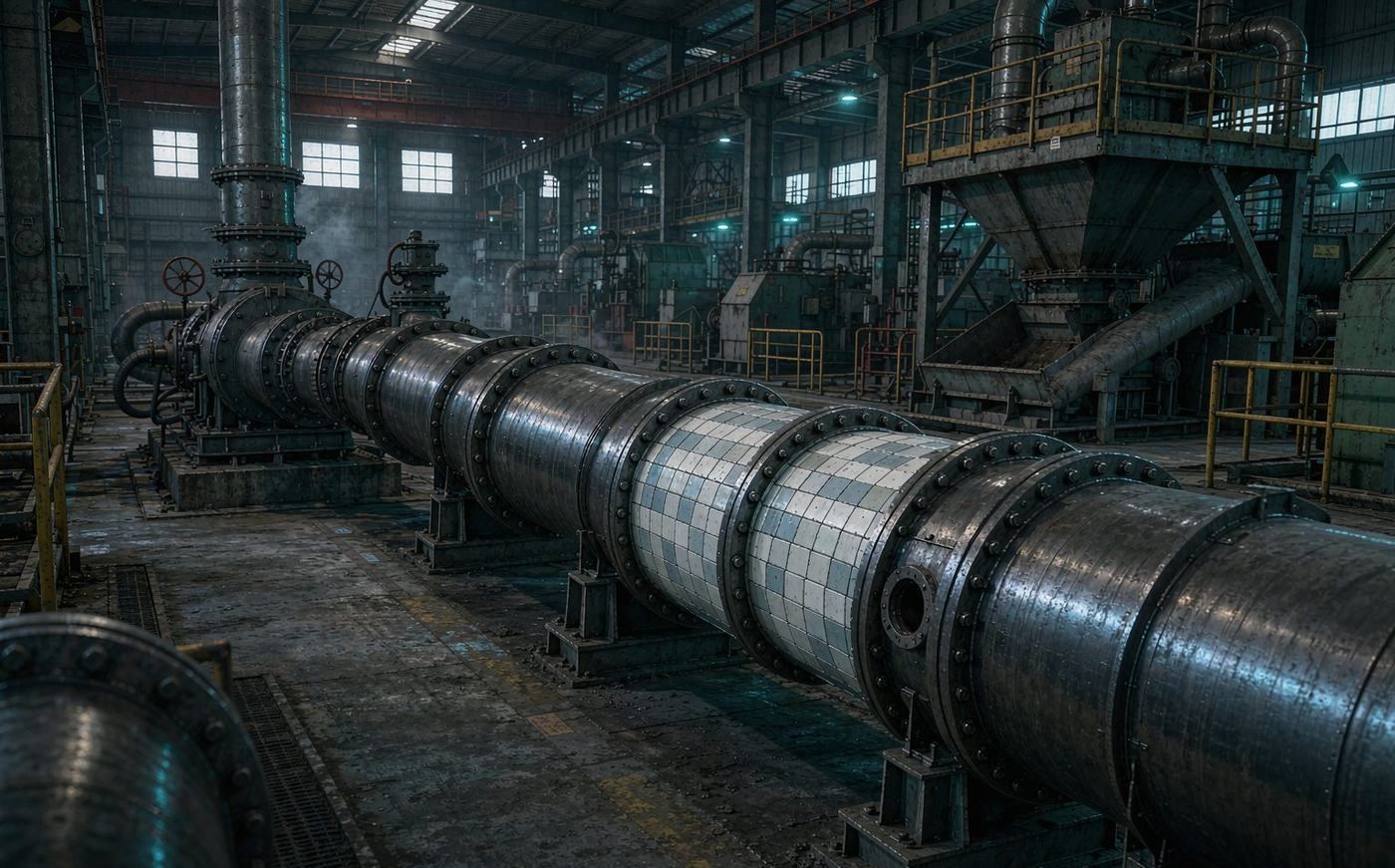
Alumina-tiled or cast RBSiC segments for slurry lines; flanged or grooved ends; elbows lined tile-by-tile so replacements go in without cutting the line out.
How linings are selectedTwo materials do almost all of the work in mining and bulk-handling wear protection — alumina wear tiles and reaction-bonded silicon carbide. This page explains how to choose between them by duty, not by catalogue.
For sliding abrasion and most slurry duty, use DA-92 / DA-95 alumina wear tiles — the industry default, and the cheapest per tonne handled. For high-velocity, coarse-particle or severe-duty points — pump internals, cyclone apexes, the elbow that eats a steel bend every quarter — use DA-SC-R reaction-bonded silicon carbide: near-zero porosity, much higher hardness, and the best erosion resistance of any affordable ceramic.
Get the duty parameters right (particle size, velocity, impact angle, temperature) and either material will outlast steel by a multiple most buyers find hard to believe. Get them wrong, and even ceramics fail early.
Nearly every wear problem in mining, power and bulk handling is solved by one of these two ceramics. The engineering is in knowing which — and where neither is right.
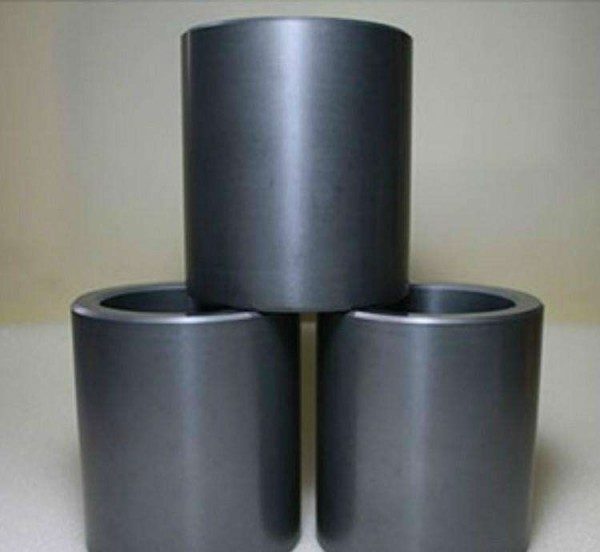
A SiC skeleton infiltrated with molten silicon, giving a fully dense body with almost no porosity — the property that makes it the best erosion-resistant ceramic affordable at industrial scale.
The most widely installed wear ceramic in the world. Nothing else matches its cost per tonne handled on sliding and low-velocity abrasion — which is why most mine sites are lined with it.
Read your operating condition, not a hardness number. This is the table our engineers work from.
| Duty condition | Typical example | First choice | Why |
|---|---|---|---|
| Sliding abrasion, low velocity (< 3 m/s), fine particles | Chutes, hoppers, bunkers, feed plates | DA-92 alumina tiles | Lowest cost per tonne handled; easy field repair |
| Slurry pipeline, 3–5 m/s, particles < 5 mm | Tailings, concentrate, thickener underflow | Alumina-lined pipe (DA-92 / DA-95) | Industry default; lined in replaceable segments |
| High velocity (5–8 m/s) or coarse / sharp particles | Pump suction & discharge, severe elbows, cyclone feed | DA-SC-R reaction-bonded SiC | Best erosion resistance; no joints to fail |
| Strong impact — large lumps, drop height | Crusher feeds, transfer points, rock chutes | Ceramic-rubber composite, or engineered DA-95 with backup | Ceramics are brittle; absorb impact first, then abrade |
| High temperature (> 400 °C) or thermal cycling | Hot clinker, furnace feed, hot slag chutes | SiC family — for severe thermal shock, ask about Si₃N₄-bonded SiC | Adhesive systems and tiles have temperature limits |
| Chemistry plus abrasion (acidic slurry, pH < 4) | FGD slurry, chemical process lines | DA-SC-R reaction-bonded SiC | Dense body resists attack; grout is the weak point in tiled systems |
On the border between two rows? Send us the duty data instead of guessing — see the selection guide for how the decision is made in practice.
From replacement tiles to complete lined assemblies — quoted as components, not as tonnes of material.
Alumina-tiled or cast RBSiC segments for slurry lines; flanged or grooved ends; elbows lined tile-by-tile so replacements go in without cutting the line out.
How linings are selected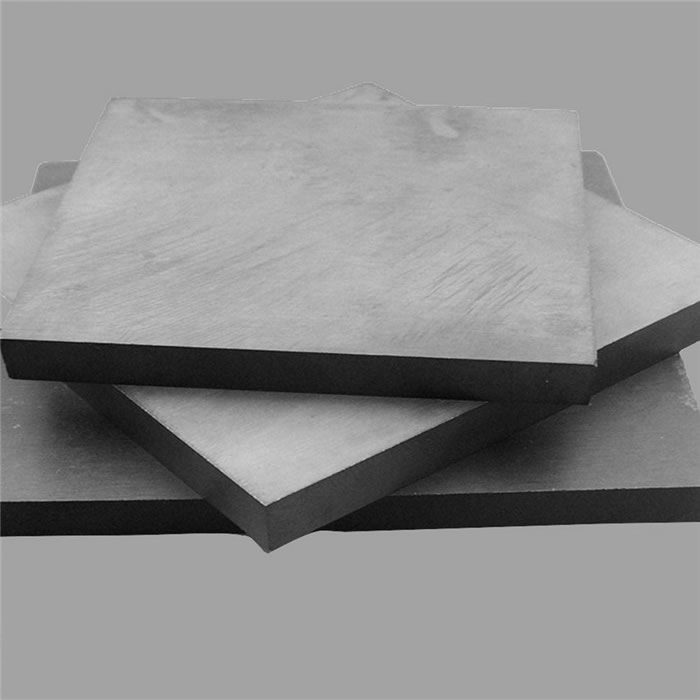
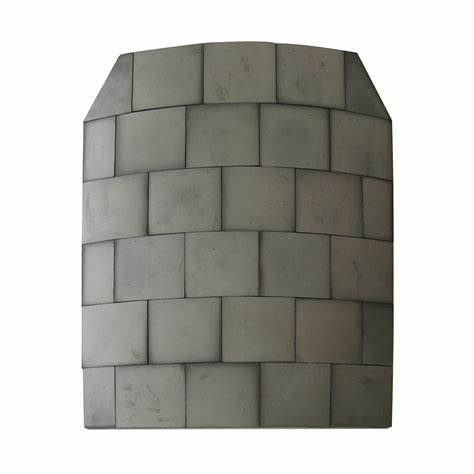
DA-92 / DA-95 tiles in square, rectangular and hexagonal patterns; paste-on, stud-welded or bolt-on; ceramic-rubber composite pads for impact zones.
Request a tiling layoutRBSiC cyclone cones and apexes, pump wear plates and sleeves, spray and burner nozzles — near-net-formed to keep diamond grinding cost down.
See the SiC datasheetWear ceramics rarely win on purchase price. They win on the arithmetic below — and the honest way to run it is with your duty data, not a brochure multiple.
| Material | Life vs bare steel (sliding abrasion) | Life vs bare steel (severe slurry) | Relative cost / kg | Best when |
|---|---|---|---|---|
| Bare steel (reference) | 1× | 1× | 1× | Short campaigns, frequent re-routing |
| DA-92 alumina tiles | 8–15× | 3–6× | ≈ 1.5–2.5× | Budget-driven sliding wear, large areas |
| DA-95 alumina tiles | 10–18× | 4–8× | ≈ 2–3× | Faster streams, finer grain needed |
| DA-SC-R reaction-bonded SiC | 10–20× | 8–15× | ≈ 4–6× | Severe erosion where downtime dominates |
These multiples are typical for well-matched duty — they are not a guarantee, and any supplier who quotes a lifetime in months without seeing your particle size distribution, solids content and velocity is guessing. What we will do is run the calculation that actually matters: a lined pipe that costs 3× more and lasts 10× longer also saves nine change-outs, nine shutdowns and the labour that goes with them. Send the duty data and we will put your numbers in the table.
Tailings and concentrate lines, thickener underflow, cyclone feed and overflow, mill discharge, pump stations.
FGD slurry circulation, ash and hydraulic handling lines, burner and pulveriser wear parts.
Sinter and pellet handling, slag and dust chutes, coke and flux conveying — with high-temperature grades where needed.
Clinker and raw-meal ducting, separator and fan housings, conveyor and transfer-point liners.
Suction and delivery pipe sections, splash-zone liners, shiploader and reclaimer wear surfaces.
Hoppers, bunkers, vibratory feeders, screw conveyors and any surface where steel wears faster than the maintenance schedule allows.
Six duty parameters turn an enquiry into a quotable, engineered package — the same ones our engineers ask for on every wear project.
Let velocity, particle size and impact decide. Below roughly 3–4 m/s with particles under 5 mm, DA-92/DA-95 alumina tiles are the industry default and the cheapest per tonne conveyed. Above that — pump internals, cyclone apexes, severe elbows, coarse or sharp particles — DA-SC-R reaction-bonded SiC wins on life because it has almost no porosity and no grout lines to fail.
In well-matched sliding-abrasion duty, alumina tiles typically last 8–15 times as long as bare steel, and reaction-bonded SiC 10–20 times as long; in severe slurry duty the multiples fall but remain substantial. These are typical ranges, not a guarantee — the honest way to get a number is to send your particle size distribution, solids content and velocity so we can calculate cost per tonne conveyed rather than quote a slogan.
Both. Existing equipment is routinely re-tiled on site or in our workshop: surfaces are cleaned and prepared, new DA-92/DA-95 tiles are bonded, stud-welded or bolted on, and worn sections are replaced tile by tile so the rest of the lining stays in service. For cast reaction-bonded SiC, parts are supplied as replacement segments sized to the existing housing.
It is set by the fixing system more than the ceramic. Alumina tiles bond with high-temperature adhesives or mechanical fixing are comfortable to roughly 200–400 °C in continuous service depending on the system; reaction-bonded SiC is a monolithic ceramic and handles far higher temperatures. Above 400 °C, or under severe thermal cycling, tell us the duty — the right answer is usually a different ceramic grade or a different fixing design, and quoting it without the temperature is how linings fall off.
All three, chosen by temperature, impact and maintainability. High-temperature adhesive bonding suits most sliding-abrasion surfaces and keeps the lining thin. Stud-welded or mechanically anchored tiles are used where adhesives would creep, where the surface gets hot, or where tiles must be replaceable in the field. For high-impact areas, ceramic-rubber composite pads combine an impact-absorbing rubber layer with ceramic tiles.
Particle size, velocity, solids, temperature — four numbers are enough to start. Our engineers reply with a lining recommendation and a quotation within 24 hours.